

Description
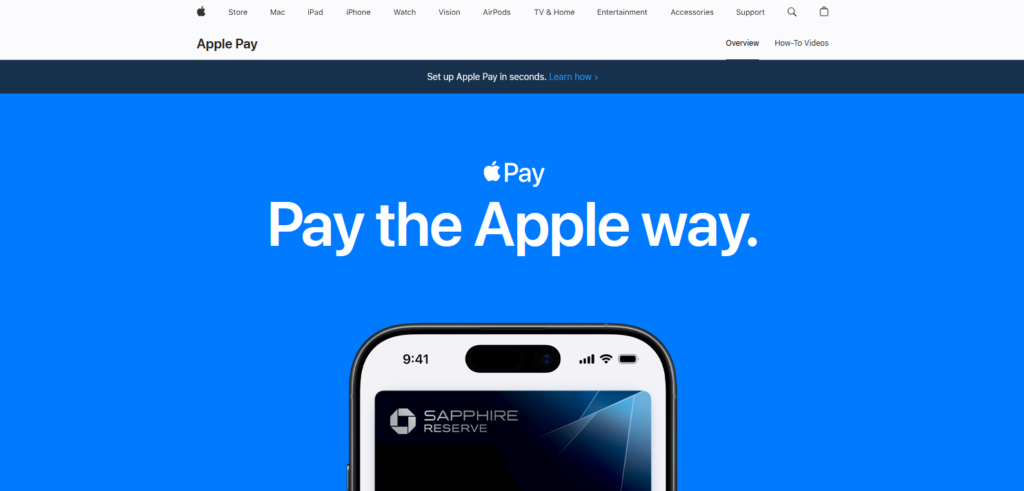
Apple Pay is Apple's secure, private, and effortless digital wallet and payment service, designed to transform how people pay—whether in stores, within apps, on websites, or when sending money to friends and family. Built directly into iPhone, Apple Watch, iPad, and Mac, Apple Pay turns Apple devices into powerful, secure payment tools that work seamlessly with the cards users already have, while adding layers of privacy and protection that traditional payment methods simply cannot match.
At its heart, Apple Pay is about simplicity and security working together. Setting up Apple Pay is quick and intuitive: users simply add their credit, debit, or prepaid cards to the Wallet app by scanning the card with their device's camera or entering details manually. Once verified by their bank or card issuer, those cards are ready to use everywhere Apple Pay is accepted—without ever needing to carry a physical wallet. For transit riders in supported cities, Apple Pay can store transit cards and passes, enabling tap-and-go access to subways, buses, and trains with the same ease as retail purchases.
When it's time to pay, Apple Pay makes the process remarkably fast and secure. In stores, users simply hold their iPhone or Apple Watch near a contactless payment terminal and authenticate with Face ID, Touch ID, or their device passcode. A gentle tap and subtle haptic feedback confirm the payment is complete—no need to unlock the device, open an app, or hand over a physical card. Online, Apple Pay enables one-tap checkout in supported apps and on websites in Safari, eliminating the need to manually enter shipping and billing information for every purchase. For person-to-person payments, Apple Cash integrated within Messages lets users send and receive money securely, with funds available instantly in Wallet or transferable to a linked bank account.
Security and privacy are foundational to Apple Pay's design—and represent its most significant advantage over traditional payment methods. When a card is added to Apple Pay, the actual card number is never stored on the device or on Apple servers. Instead, a unique Device Account Number is assigned, encrypted, and stored securely in the device's dedicated Secure Element—a certified hardware chip designed to protect sensitive data. Every transaction is authorized with a one-time unique dynamic security code, so even if a transaction were intercepted, the information could not be reused. Merchants never see or store the user's actual card details, significantly reducing the risk of fraud and data breaches. Apple itself does not track what users buy, where they buy it, or how much they spend—preserving privacy as a core principle, not an afterthought.
Apple Pay works with major banks and card issuers around the world, supporting thousands of financial institutions across dozens of countries and regions. Users can store multiple cards in Wallet and choose which one to use at the time of purchase, making it easy to separate personal and business expenses or take advantage of specific card rewards. Apple Pay also supports loyalty cards, boarding passes, event tickets, student IDs, and even car keys in compatible vehicles—consolidating everyday essentials into one secure, accessible place.
For developers and businesses, Apple Pay offers powerful tools to enhance customer experience and drive conversion. Integration is straightforward through well-documented APIs and frameworks that work across iOS, iPadOS, watchOS, and macOS. In apps and on the web, Apple Pay buttons provide a familiar, trusted checkout option that reduces friction and cart abandonment. For physical retailers, accepting Apple Pay requires only a standard contactless payment terminal—no additional hardware or complex setup needed. Transaction fees for merchants are the same as traditional card-present payments, with no extra charges for accepting Apple Pay.
Apple Pay extends beyond retail into everyday life. With Apple Cash, users in supported regions can send and receive money directly in Messages, split bills with friends, or request payments for shared expenses—all protected by the same security features that safeguard purchases. Apple Pay Later (where available) allows eligible users to split purchases into four equal, interest-free payments over six weeks, with no fees when payments are made on time. For transit, Apple Pay supports express mode in many cities, allowing riders to tap through fare gates without authenticating—making commuting faster and more convenient. On iPhone and Apple Watch, users can even access hotel room keys, car keys for compatible vehicles, and secure building access—all stored securely in Wallet and protected by Apple's privacy standards.
Accessibility is central to Apple Pay's design. VoiceOver support helps users with visual impairments navigate Wallet and complete payments independently. Switch Control and other assistive technologies ensure that people with motor or




Add a review